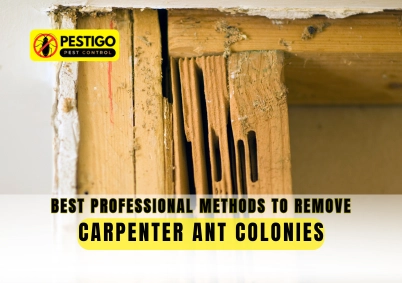
Carpenter ants may seem harmless at first, but they can cause serious damage to wooden structures if left untreated. Unlike termites, carpenter ants don’t eat wood; they tunnel through it to create nests, weakening beams, walls, decks, and other structural components over time. If you’ve noticed large black ants, piles of sawdust-like debris, or rustling sounds inside walls, you may already have a carpenter ant infestation. The best professional method to remove carpenter ant colonies is to locate the primary nest, eliminate satellite colonies, treat affected areas with targeted pest control solutions, and address moisture issues that attract these pests in the first place.
Professional pest control services are significantly more effective than DIY treatments because they target the entire colony rather than just the visible ants. According to the Government of Canada, carpenter ants can establish large colonies and often create satellite nests inside homes, making complete removal challenging without expert intervention.
Why Carpenter Ants Are a Serious Problem
Many homeowners underestimate the damage carpenter ants can cause. These insects prefer damp, decaying wood and often invade homes through cracks, utility openings, tree branches touching structures, and moisture-damaged areas.
Health Canada notes that carpenter ants can damage wooden structures by excavating galleries and tunnels inside wood, potentially leading to costly repairs if infestations are ignored.
Common signs of a carpenter ant infestation include:
- Large black or reddish-black ants inside your home
- Piles of wood shavings (frass)
- Hollow-sounding wood
- Rustling noises inside walls
- Winged ants appearing during spring
- Increased ant activity at night
Professional Methods Used to Remove Carpenter Ant Colonies
1. Comprehensive Inspection and Colony Identification
Professional exterminators begin with a detailed inspection to identify:
- Main colony locations
- Satellite nests
- Moisture-damaged wood
- Entry points
- Ant trails and foraging patterns
Finding the source of the infestation is crucial because simply killing visible ants will not eliminate the colony. A professional inspection helps uncover hidden nests located in walls, attics, crawl spaces, or outdoor structures.
2. Nest Location and Direct Treatment
One of the most effective carpenter ant control methods is locating and treating the actual nest.
Professionals use specialized equipment and experience to identify active colonies. Once found, they apply targeted treatments directly into nesting sites. This method ensures the queen and worker ants are eliminated, preventing future colony growth.
Government pest management guidance emphasizes that permanent control often requires locating and treating the nest itself, especially when satellite colonies are present.
3. Professional Baiting Systems
Modern pest control companies frequently use advanced ant baiting systems.
These baits contain slow-acting ingredients that worker ants carry back to the colony. As the bait spreads throughout the nest, it reaches queens, larvae, and other colony members.
Benefits of professional baiting include:
- Long-term colony elimination
- Reduced pesticide use
- Effective treatment of hidden nests
- Continuous monitoring of ant activity
Unlike store-bought baits, professional-grade products are strategically placed based on ant behavior and infestation severity.
4. Perimeter Treatments and Barrier Protection
Professional perimeter treatments create a protective barrier around your property.
Technicians apply treatments around:
- Foundations
- Windows and doors
- Utility penetrations
- Decks and patios
- Landscaping features
These treatments help stop carpenter ants from entering your home and reduce the likelihood of future infestations.
5. Moisture Control and Structural Repairs
Carpenter ants are strongly attracted to damp and decaying wood. Eliminating moisture sources is often the key to long-term prevention.
Professionals may recommend:
- Fixing leaking pipes
- Repairing roof leaks
- Improving attic ventilation
- Replacing damaged wood
- Cleaning clogged gutters
- Reducing humidity levels
According to British Columbia’s pest management guidance, maintaining dry conditions and repairing moisture-damaged wood significantly reduces carpenter ant activity.
Why DIY Carpenter Ant Colonies Removal Often Fails
Many homeowners attempt DIY carpenter ant control using sprays and traps. While these methods may kill visible ants, they rarely eliminate the entire colony.
Common DIY mistakes include:
- Treating only visible ants
- Missing satellite nests
- Using incorrect products
- Ignoring moisture problems
- Failing to locate the queen
Carpenter ant colonies can contain hundreds or even thousands of ants spread across multiple nesting locations. Without professional expertise, infestations often return.
How Pestigo Eliminates Carpenter Ant Colonies
At Pestigo, we use a comprehensive carpenter ant extermination process designed to eliminate colonies at their source.
Our approach includes:
- Thorough property inspections
- Identification of primary and satellite nests
- Professional-grade treatment solutions
- Targeted baiting systems
- Long-term prevention strategies
- Safe and effective pest management methods
We don’t just remove the ants you see; we target the entire colony to help protect your property from recurring infestations.
If you’re noticing signs of carpenter ants in your home or business, don’t wait for structural damage to worsen. Contact Pestigo today for a professional inspection and customized treatment plan.
Preventing Future Carpenter Ant Infestations
After treatment, homeowners can reduce future risks by:
- Removing dead trees and stumps
- Storing firewood away from structures
- Trimming tree branches touching buildings
- Repairing water damage quickly
- Sealing cracks and entry points
- Maintaining proper drainage around foundations
Preventative maintenance combined with professional pest control is the most effective way to keep carpenter ants away permanently.
Final Thoughts
Carpenter ant infestations can cause extensive structural damage if left untreated. While DIY solutions may offer temporary relief, professional pest control provides the most reliable and long-lasting results. By identifying nests, eliminating colonies, addressing moisture issues, and implementing preventative measures, professionals can effectively remove carpenter ants and protect your property.
If you suspect carpenter ants in your home, trust Pestigo’s experienced team to deliver safe, effective, and lasting solutions. Schedule your inspection today and stop carpenter ants before they cause costly damage.
FAQs
- How do professionals get rid of carpenter ants?
- Professionals locate the nest, apply targeted treatments, use specialized bait systems, and address conditions that attract carpenter ants, such as moisture-damaged wood.
- Can carpenter ants damage my home?
- Yes. Carpenter ants excavate wood to build nests, which can weaken structural components over time and lead to expensive repairs.
- How long does carpenter ant treatment take?
- The timeline depends on the size of the infestation and colony location. Most professional treatments show significant results within a few days to several weeks.
- Q. Are carpenter ants worse than termites?
- Both can cause structural damage. However, termites eat wood while carpenter ants tunnel through it to create nesting galleries.
- How can I prevent carpenter ants from returning?
- Repair moisture issues, remove decaying wood, seal entry points, maintain proper ventilation, and schedule regular pest inspections.
- When should I call a professional exterminator?
- If you notice recurring ant activity, sawdust-like debris, winged ants, or signs of wood damage, it’s best to contact a professional pest control company immediately for an inspection.