
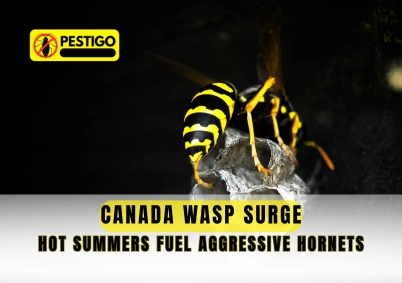
Canada is experiencing a major rise in wasp and hornet activity as hotter summers, longer heat waves, and dry weather create the perfect breeding conditions for aggressive stinging insects. Across cities like Toronto, Montreal, Calgary, and Vancouver, homeowners are reporting larger nests, more frequent swarms, and increasingly aggressive hornet behavior during late summer and early fall. Experts say climate change and warmer temperatures are accelerating wasp colony growth, leading to a noticeable pest surge across Canada.
According to recent reports, warmer weather is causing wasp queens to emerge earlier and build larger colonies that survive longer into the season. In some Canadian regions, pest control companies are seeing record numbers of calls related to yellow jackets and hornets.
Why Are Wasps and Hornets Increasing in Canada?
The connection between climate change and rising wasp populations is becoming clearer every year. Hot summers provide ideal conditions for queen wasps to establish nests quickly and produce thousands of worker wasps before fall arrives.
Environment and Climate Change Canada recently reported that several Canadian heat waves were made significantly more likely due to climate change, with temperatures reaching well above seasonal averages in provinces like Alberta, British Columbia, Quebec, and Atlantic Canada.
These extreme temperatures affect insect life cycles in several ways:
- Earlier queen emergence in spring
- Faster nest development
- Longer breeding seasons
- Higher survival rates for colonies
- Increased aggression when food becomes limited
As summer progresses, food sources such as insects and nectar begin to decline. This forces wasps and hornets to search for sugary drinks, garbage, fruits, and outdoor food, bringing them closer to people.
The Most Aggressive Wasps Found in Canada
Several wasp species are becoming more common in Canadian neighborhoods, parks, and commercial areas.
- Yellow Jackets
Yellow jackets are among the most aggressive wasps in Canada. They often build nests underground, inside walls, or near garbage bins. These insects become especially hostile in late summer and can sting multiple times.
- Bald-Faced Hornets
Bald-faced hornets build large aerial nests in trees, roofs, and backyard structures. They aggressively defend their nests and may chase perceived threats over long distances.
- Paper Wasps
Paper wasps are less aggressive than yellow jackets but still pose risks when their nests are disturbed near homes, patios, or gardens.
Hot Summers Are Changing Wasp Behavior
Experts across Canada say the 2025 season has shown unusually high wasp activity. In Toronto and Montreal, residents have reported a sharp rise in hornet nests and outdoor stings. Some exterminators noted that hot and dry weather accelerated the insect breeding cycle, causing colonies to peak earlier than normal.
Late summer is often the worst period because colonies can contain thousands of wasps. Once larvae stop producing sugary secretions for worker wasps, the insects become more desperate for food. This is why wasps aggressively hover around:
- BBQs
- Outdoor restaurants
- Picnic areas
- Soda cans
- Garbage containers
- Pet food bowls
This seasonal behavior explains why many Canadians notice more aggressive hornets in August and September.
Health Risks of Wasp Stings
For most people, a single sting causes temporary pain and swelling. However, multiple stings or allergic reactions can become dangerous.
According to pest experts, approximately 3–5% of Canadians are allergic to wasp venom and may experience anaphylaxis, a severe life-threatening reaction requiring immediate medical treatment.
Symptoms of severe allergic reactions include:
- Difficulty breathing
- Swelling of the throat
- Dizziness
- Rapid heartbeat
- Severe swelling
- Loss of consciousness
Children, elderly individuals, and pets are particularly vulnerable to repeated stings.
How Canadians Can Prevent Wasp Infestations
Preventing wasp nests early is the best way to reduce risks during peak season. Homeowners can take several practical steps to minimize infestations.
Keep Outdoor Areas Clean
Wasps are attracted to food waste and sugary residues. Always:
- Seal garbage bins tightly
- Clean outdoor dining areas
- Remove fallen fruit from yards
- Rinse recycling containers
- Avoid leaving pet food outside
Inspect Your Property Regularly
Check for nest activity around:
- Roof edges
- Decks
- Attics
- Sheds
- Trees
- Wall cracks
Small nests are easier and safer to handle before colonies expand.
Avoid Provoking Wasps
Swatting at wasps often triggers aggressive behavior. Stay calm and move away slowly if wasps gather nearby.
Use Professional Pest Control
Large hornet or wasp nests should never be removed without professional assistance. Disturbing active colonies can result in multiple stings and serious injuries.
Climate Change and Future Wasp Surges in Canada
Scientists and pest control professionals believe Canada may continue seeing larger wasp populations as temperatures rise. Longer warm seasons allow queens to survive longer and establish stronger colonies.
Urban areas with food waste, outdoor dining, and warmer environments may become hotspots for recurring infestations. If climate trends continue, Canadians could face:
- Longer wasp seasons
- Larger hornet nests
- Increased sting incidents
- More emergency pest control calls
This growing issue highlights the importance of public awareness and early prevention.
Why Professional Pest Control Matters
DIY wasp nest removal can be dangerous, especially with aggressive species like bald-faced hornets and yellow jackets. Professional pest control experts have the equipment, protective gear, and treatment methods needed to safely eliminate nests.
If you notice increasing wasp activity around your home or business, contacting a trusted pest control provider early can prevent a small problem from turning into a serious infestation.
For reliable and professional wasp nest removal in Canada, Pestigo offers expert pest control solutions designed to protect homes, families, and businesses from dangerous hornet and wasp infestations.
Conclusion
Canada’s rising temperatures are contributing to a noticeable surge in wasp and hornet activity across the country. Hot summers, longer breeding seasons, and climate-driven environmental changes are helping colonies grow faster and become more aggressive.
From Toronto to Montreal and beyond, Canadians are facing increased risks from yellow jackets, hornets, and other stinging pests. Understanding wasp behavior, practicing prevention, and seeking professional pest control services can help reduce the dangers associated with these aggressive insects.
As climate conditions continue to evolve, proactive pest management will become increasingly important for homeowners and businesses across Canada.
FAQs
- Why are there so many wasps in Canada this year?
Hotter summers and longer warm seasons are helping wasp colonies grow larger and survive longer. Climate change and dry weather conditions are major factors behind the increase.
- When are wasps most aggressive in Canada?
Wasps are usually most aggressive during late summer and early fall, especially in August and September when food becomes scarce.
- Are hornets more dangerous than regular wasps?
Hornets are generally larger and can deliver more painful stings. They also defend their nests aggressively and may sting multiple times.
- How do I know if I have a wasp nest on my property?
Common signs include increased wasp activity near roofs, walls, trees, sheds, or underground holes. Visible paper-like nests are also a strong indicator.
- Should I remove a wasp nest myself?
Small inactive nests may be manageable, but active or large nests should always be handled by professional pest control experts for safety reasons.
- How can I keep wasps away from my home?
Keep garbage sealed, clean outdoor food areas, remove standing food sources, and inspect your property regularly for early nest activity.